Sunday, October 16, 2016

THE OLD FRENCH TOWN, FRENCH LIQUEUR AND THE DAMAGE OF HISTORICAL SITES


During the battle of France in 1940 the young  German officer, Hans von Luck, was ordered to attack the old French town, Fecamp. The old town is situated within Upper Normandy region. Fecamp is a commune in the Seine-Maritime department  in the Haute-Normandie region in the northern France.
Hans von Luck had to make a decision about the future of the old town which is famous for historical buildings: The Casino, Town Hall and the Benedikter Monastry. If he attacked the town, he had to destroy the historical sites. He decided not to attack the town due to his personal interest in old historical buildings and above all: French liqueur!
When he was told that ” Liqueur DOM Benedictine ” was produced in Palais Benedictive in Fecamp, he made this statement: ” … Monsieur  le Maire, I gave an order to save the Town Hall, the Monastery and the Casino because I have a great respect for the historical buildings. Pour vous, la guerre est finie …”. His love for the French liqueur was not mentioned in his public statement about the future of the town. The winner of the battle was the liqueur! He drank the French liqueur with great pleasure, bought some bottles for his private collections, and he gave a party for the inhabitants of the town paid by himself.

D.O.M means: DEO-OPTIMO- MAXIMO or  ” To God, the Greatest and the Best ”

SOURCE: Hans von Luck: Panzer Commander. The Memoirs of Colonel Hans von Luck. Vega Forlag AS. 2007. Page 53- 57.


T

Thursday, July 21, 2016

THE SAILOR WENT ASHORE FOR A WHILE? THE NORWEGIAN NEWS REPORTER, RESTLESS TRAVELLER AND WRITER CHRISTIAN BORCH RETIRED?
Old sailors who had to navigate by knowing the laws of the winds, the power of the seas, the storms, the sun, the rain and knowledge in living conditions of foreign countries, were acting as professional prophets. The modern news reporter might get a close feeling of how to work as a sea captain by navigating  between events of crucial importance for nations and people. Christian Borch is a sailor,not an official prophet paid by the government to foresee difficult problems in the future. But he is close the work of a prophet. He has published a new book where the content is a result of his personal experience making a living in a world where critical events were on his agenda for more than 30 years. He knew what went  on,but he was not in a position to take a decision to make the world better. But he knew what should be done. The new book, ” Banalitentens tyranni ”, ( Eng. title: The Tyranny of the Commonplace ”), is a result of hard work for at least  four  to five years. The report is not ment as  light entertainment  highlighting important meetings and private and secret information about international known  persons. You would not find any sex scandals  revealed by the reporter who has observed more than we should know. No. The report is not an encouraging reading.On the contrary, he is presenting a paper contenting a critical report of the political, social and economic development of the world the last decades. What is his message? Christian Borch has worked for the Norwegian Broadcasting Corporation(NRK)from 1978 to 2015 as a news reporter. He has written books about foreign politics. His message is easy to read: An attack on the the economic policy introduced during political conservative governments in Norway and other countries. The attack is hard. If you did not know the man, the sailor, the traveller and the reporter, CB, you might think that the book is written on behalf of and paid by the Socialist Left Party (SV) of Norway. No. The facts presented are also facts that the writer has experienced during his work as a reporter and a sailor. Once a sailor,always  sailor, once a reporter, always a reporter.
To my surprise, he has not pardoned the politicians who introduced the new , neo- liberal economic politic. The attack is also hard on one special international consulting company: McKinsey. The firm is a global company, comprising of more than 10,000 consultants and nearly 2,000 research and information professionals.
What is wrong with the economic situation of the world? What might be the reason for the election of England to withdraw from EU in 2016?
GREED, GREED and more GREED. Those few who are dominating the economic development  of the world have lost an important aim: The welfare of people. All went wrong when the liberal economics predicted that free enterprise. No officail control of the economie should be the keystone of the economic policy of Norway and the rest of the world. Europe is in a critical stage for the time being.
EU has failed. Solidarity means that you take care of each other – not only asking for support all the way without any personal contributions.
The writer has not made a list of all the persons mentioned in his book and the literature used.I have done the work for him.

Read the book . The statements published are not made by a member of the Norwegian Socialist Party (Sosialistisk Venstre Parti(SV), but I  am sure that a free membership must be forwarded the
restless sailor, former colleague from NRK, a splendid writer and reporter?

An index of books referred to in his book:

Michael Lewis:” Liar’s Poker. The Money Culture ”
Bethany McLean and Joe Nocera: ” All the Devils are Here ”
Professor Patrick Bolton: ” Good Banker ”
Georges Soros/ Gregor Peter Schmitz: ” The tragedy of the European union: Disintegration or revival?”
Stephane Hessel: ” Indignez vous”
Donald J. Savoies: ” Power: Where is it? ”
George Friedman: ” Flashpoints ”
Anthhony Giddens: ” ” The Third Way ”
Duff MacDonald: " The Firm"

INDEX – A LIST OF PERSONS REFERRED TO IN THE BOOK:

Andenæs, Mads
Andersen, Arthur
Anundsen, Anders
Applebaum, Anne
Barclay, David
Barclay, Fredrik
Barroso, Jose Manuel
Basu, Sanjay
Beck, Ulrich
Berger, Asle
Bernander, John G.
Bernanke, Ben,
Bittner, Jochen
Bismarck, Otto von
Bjerksund, Petter
Bjerke, Rune
Blair, Tony
Bolton, Patrick
Breivik, Terje
Brown, Gordon
Bush, George W


Challaghan, James
Cameron, David
Campbell, W. Keith
Carney, Mark
Cavaco, Anibal
Cheney, Dick
Christensen, Chr.
Clinton, Bill
Cohn-Bendit, Daniel
Crouch, Colin
Delors, Jacques
Devold, Kristin Krohn
Diamond, Bob
Eckhoff, Anders
Eriksen, Øyvind
Farage, Nigel
Fischer, Joschka
Flint, Douglas
Ford, Henry
Fossland, Jørgen
Friedman, George
Gaulle, Charles de
Giddens, Anthony
Giovanni, Enrica
Gjesdal, Knut
Glad, Karl
Grillo, Beppe
Grimen, Harald
Gurria, Ange
Hågensen, Yngve
Hammer, Anders Sømme
Hansen, Odd Chr.
Hatlen, Siri
Heath, Edward
Hessel, Stephane
Hollande, Francois
Hoxha, Enver
Hussein, Saddam
Jenking, Antony
Joseph, Franz
Kenning, George
Keynes, John Maynard
Kjøll, Berit
Kohl, Helmot
Korvald, Lars
Krugman, Paul
Langangen, Jan Erik
Less, Timothy
Lewis, Michae
Lorentzen, Fredrik Vogt
MacDonald, Duff
McLean, Bethany
Magnus, Birger
Major, John
Marthinussen, Hans Fredrik
Martinsen, Wiktor
Mason, Paul
Menasse, Robert
Mercouri, Melina
Merkel, Angel
Michnik, Adam
Mikkelsen, Bente
Mitterrand, Francois
Monnet, Jean
Neyer, Jurgen
Nocera, Joe
Norvik, Harald
Oborne, Peter
Owen, David
Papandreou, Andreas
Papandreou, Giorgios
Patty, Marcie
Patty, Peppermint
Pen, Jean-Marie Le
Pinto, Ana Mario
Reagan, Ronald
Rajoy, Mariano
Reich, Robert
Reinertsen, Thorvald
Reybrouck, David van
Rogers, Bill
Roosevelt, Franklin D.
Rumsfield, Donald
Røeggen, Ivar Petter
Røkke, Kjell  Inge
Rønnevik, Hans Kristian
Røsjø, Endre
Sachs, Goldman
Sannes, Torstein
Sarkozy, Nicolas
Savoie, Donald J.
Sawerska, Terlza
Scargill, Arthur
Schauble, Wolfgang
Schlytter, Poul
Schmidt, Helmut
Schmitz, Gregor Peter
Schuman, Robert
Sconza, Josephine
Sennett, Richard
Sieghart, Mary Ann
Simms, Brendan
Siem, Martin
Skilling, Jeff
Slagstad, Rune
Slauther, Anne-Marie
Smith, Adam
Soll, Jacob
Sorog, George
Spetalen, Øystein Stray
Stoltenberg, Jens
Stieglitz, Joseph
Stucklet, David
Sutherland, Rory
Sverdrup, Harald
Syversen, Hans Olav
Tarhouni, Ali
Taylor, Charles
Teige, Bjørn Asle
Terning, Kai Morten
Thatcher, Margaret
Tilford, Simon
Torreblancce, Jose Ignacio
Twenge, Jean M.
Tønne, Tore
Young, Hugo
Varoucahis, Yanis
Viggen, Eirik Dahl
Volcker, Paul
Walesa, Lech
Widerberg, Franz
Wilde, Oscar
Wilders, Geert
Williams, Shirley
Willoch, Kåre
Zedong, Mao
Zweig, Stefan
Åser, Svein


Friday, July 8, 2016

NORWAY 1940-TORÅS FORTRESS READY FOR ACTION?

NORWAY 1940 –TORÅS FORTRESS READY FOR ACTION?
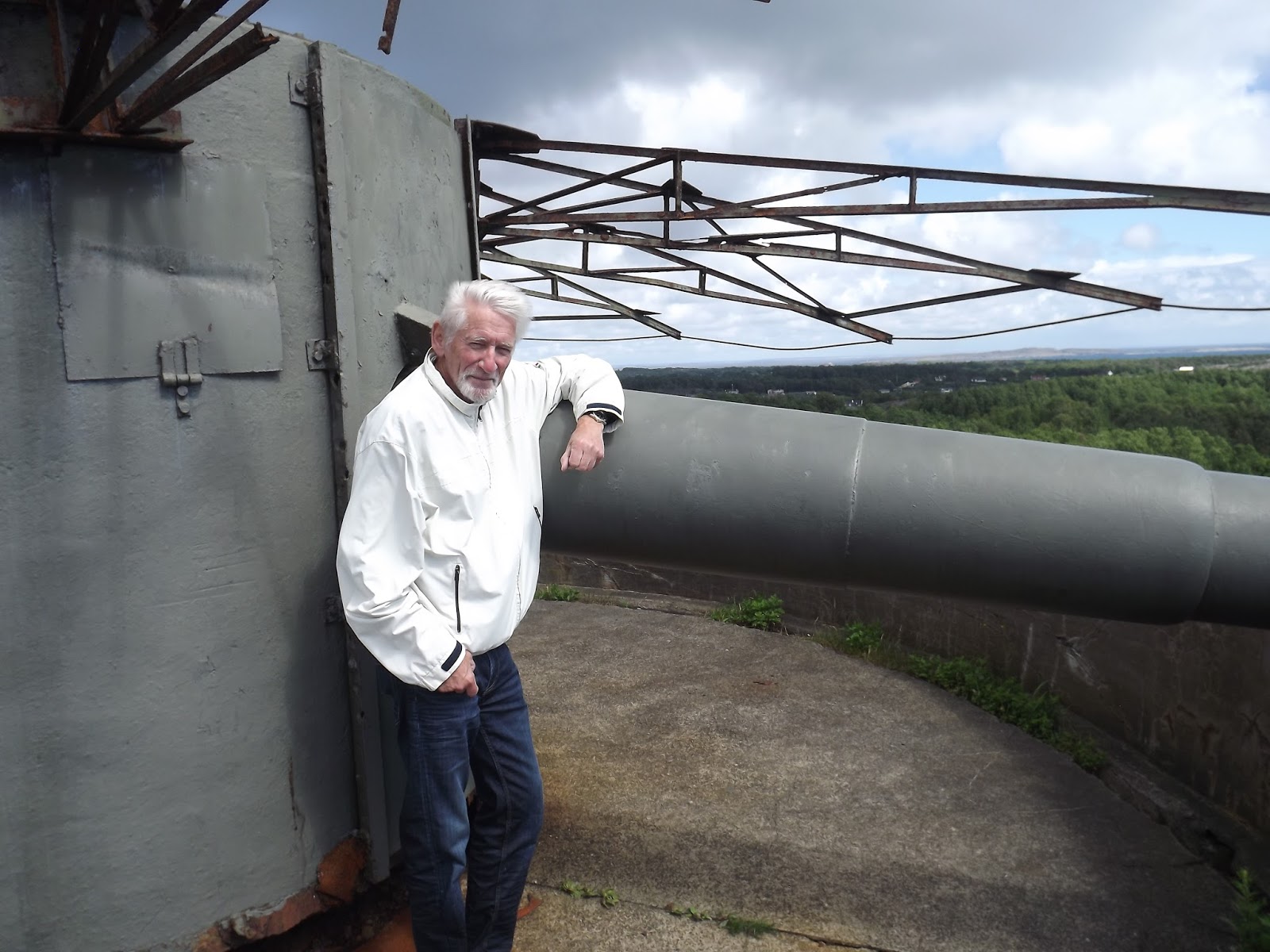
The German attack on Norway in 1940 could have been avoided if the news about the planning and military preparations of the attack on Norway had been understood and evaluated by the members of the Norwegian government. If the fortresses had been established to protect the capital of Norway, Oslo, the war might have been avoided?  A week ago, July 2016, I paid a private visit to one of the fortresses: TORÅS FORTRESS. Torås fortress was not ready for the German invasion in 1940.The fortress was not finished in 1940. No fighting took place at Torås fortress. The Germans finished  the building of the fortress in 1941. The fortress was equipped with four 15cm Bofors L/50 pieces. After the war , the Norwegian army reused Torås fortress.The fortress is situated at Tjøme, Vestfold.In 1999 the military activities on the fortress were closed. Information about the living conditions for people in the district during the war is presented in the book published by the local history association:Hvasser og Brøtsø Historieforening.The title of the book is: Øyboere i krig. The book is written by Einar Chr. Erlingsen and Kari Sundsåen. The story about Torås fortess and other military buildings ,are to be found on pages 146-155.


Friday, April 15, 2016

SPAIN/ALBIR:WALKING WITH YOUR HEAD DOWN ALONG THE BEACH

Walking along the beach of Albir is a nice experience. But do not look up all the time. If you take a look on the pavement  you will see some decorations where names are written. I did not know any of the names written but what a surprise to find out who the persons are! Spanish actors and actresses who are all famous for the work they have done. One of the persons is from Panama, Miguel Bose: I did not have time to make a list of all the names but here you have a few of them: Charo Lopez, Andres Pajares, Fernando Guillen, Miguel Bose, Maribel Verdu, Fernando Colomo, Marisa Paredes, Eusebio Poncela and Carlos Saura.

Some information about the persons written in the pavement in Albir.
Miguel Bose is a singer and actor from Panama. Born 1936, Carlos Saura is a Spanish film director, screenwriter and photographer. Born 1932.Charo Lopez is a Spanish actress.Born 1943., Maribel Verdu is a Spanish actress. Born 1970.( Known to English-speaking audiences for playing in the film: Y to mama tambien), Marisa Paredes is a Spanish actress. Born 1946., Fernando Colomo is a Spanish film producer, screenwriter and film director.Born 1946., Andres Pajars is a Spanish actor, director, writer and comedian who has worked for both theater, film and television. Born 1940., Fernando Guillen was a Spanish actor. Born 1932 and died 2013(Age 80).

Tuesday, April 12, 2016

MIGUEL DE CERVANTES

SPAIN: CARTAGENA. HISTORY ON THE WALL
Miguel de Cervantes
The city of Cartagena is worth a visit if you appreciate seaside cities, old building and historical sites. Walking close to the harbour, I was surprised to find Spanish history on the wall on one of the old buildings.The famous Spanish writer was the subject for my attention. It was not easy to find the sign on the wall, but I do wall searching for historical information when I am holiday in foreign cities. I do recall the study of his famous book, Don Quixote, during my years as a student at the Norwegian Library School in late sixties in Oslo. He is regarded as one of the greatest writer  in Spanish language. At the Norwegian Library school the book was studied by making use of a Norwegian translation. Miguel de Cervantes was assumed born in 1547 and died in 1616. His major work, Don Quixote, is considered to be the first modern  European novel. The writer did not work as a writer all his life. He was a professional soldier, a purchasting agent for the Spanish Armanda, a tax collector for the government, working for the banking industry, and  he tried to get a job as an accountant for the  port of Cartagena too. He was unable to support himself through his writings. The Count of Lemos, Pedro Fernandez de Castro y Andrade , supported him economically. Miguel de Cervantes settled in Madrid where he lived and worked until his death.
The sculpture of the writer reading books is my favorite schulpture. I have searched for the schulpture for years without any result. Call me if you find one!


Sunday, April 10, 2016

M/S TARONGA

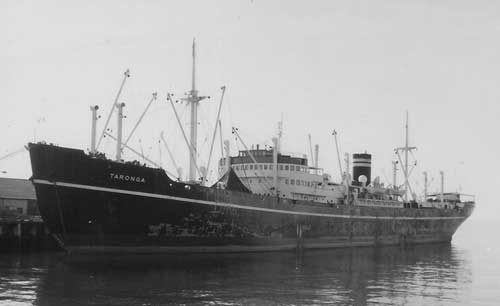
M/S  TARONGA: THE NORWEGIAN SHIP WHO DID NOT WANT TO DIE
A personal quarrel took place between a lady and sailor about the ship, M/S Taronga. The issue was the decision made in 1940 about what to do with the ship. The Norwegian government had forwarded a message to all Norwegian ships not to go to Norwegian harbours due to the political situation in Norway in April  1940. Germany had invaded Norway.
The lady who brought up the problem many years after the event in 1940, was very irritated. Both she and the sailor had been on board the ship in 1940. She is accusing him for his negative attitute not to make a mutiny to avoid a takeover  of the ship by the Germans. The sea captain had decided not to go to a foreign harbour but to seak port of refuge in the city of Larvik.
Mutiny on a Norwegian ship in 1940 would have been a sensation. The newspapers would print the story worldwide to inform that not all in Norway had lost the fighting spirit. Above all:  The mutiny might be an inspiration to the Norwegian people  telling all to reject the official statement made by the Norwegian traitor Vidkun Quisling to sail to  Norwegain harbours
The captain had made his decision to ask for port of refuge in the seaside city Larvik.No mutiny took place . The lady had no say in 1940. She was a passenger only.  But she never forgot the ship, the event, the final decision made.
FACTS ABOUT THE SHIP
M/S Taronga was launched on January 20, 1934 by Odense Staalskibsvaerft, Odense, Denmark. Service speed 16.25 knots. The owner of the ship was the Norwegian company ,Wilh. Wilhelmsen, Tønsberg, Norway. The ship was sailing along the coast of Norway after a tour in South Africa.
WHAT HAPPENED TO THE SHIP DURING WWII?
The ship was seized by the Germans on August 15, 1940 and transferred to the Kriegsmarine in February 1942. The new name of the ship was: ” Sperrbrecher 15 ”.
 Sperrbrecher  means  ” minefield breaker”. The task of the ship was to serve as a type of minesweeper by sailing ahead of other vessels through minefields  intending to detonate any mines in the path.
The ship was heavily damaged by air attack and towed to Hamburg, Germany. She was also used as a target ship in 1943. In May 1945 the ship was recovered but was completely burnt out from the air attack. M/S Taronga was repaired and she reenterd service in August 1948.
In October 1961 the ship was sold to the Sangyo Shinko K.K for scrapping.
The sailor who did not want to take part  in a mutiny in 1940 had entered the ship on May 13, 1939 and he left the ship on August 1, 1940 accompanied by a furious  and rebellious lady.
The sailor reentered the doomed ship on October 23, 1957 and he left the  ship on November 5, 1958.
The First Mate of the ship in 1940 was my father. The rebellious lady was my mother. The quarrel between them  dating  the event of  1940 went on for many years.

Question. Who was the captain on M/S Taronga in 1940? In 1954 a list of Sea Captains was published:
Norges Skipsførere. Annen Utgave. 1935 – 1953. Paul T. Dreyers Forlag- Stavanger. 487 pages.
I have read the story of all the captains listed. I seached for information about M/S Taronga. No name of the wanted man. Names of some of the sailors who had sailed the ship: Able seaman, Ole Martin Kjørholt( 1936 -1937), Mate Rolf Birger Hagelund, Mate Alv Mangor Jørgensen, Mate Oddmund Arnljot Berge, Mate Rolf Endresen and Mate Hans Pedersen.

But who was the Captain who let the Germans takeover the ship in 1940?


NEW INFORMATION 2023
New information about the Captain of Taronga that was found in " Halden Mønstringkontor " in March 30, 2023. The name of the Captain was Harald Mariunius Andresen. He was born in the City of Halden on March 18, 1892. Captain of Taronga from May 28, 1935 to August 16, 1940. The ship was taken by the Germans on August 15,1940. The crew including the Captain and the First Mate left the ship.


Thursday, March 31, 2016

AN ESSAY ON A BANNED , CONFISCATED AND FORGOTTEN BOOK-CENSORSHIP?
”… Books banned and confiscated are books prohibited by law or to which free access is not permitted by other means …”
”… Banning of books  is censorship introduced for political, legal, religious, moral or commercal reasons…”


An essay on an unknown book: ”Marschen till Markajarvi. En berettelse om svensk frivillige i Finland” written by Ragnar Em. Naess.
The book was published in 1940. The name of the author is Ragnar Em. Naess.The English title of the book is: ” The March to Markajarvi.The story about Swedish volunteers in Finland”.
The first edition of the book was published in 1940 by the Swedish publishing company, Albert Bonniers Førlag 1940. Due to critical comments about the content of the book, the publisher decided to confiscate the book already in 1940.
In 2006 the book was published again by the publishing company, Leander & Ekholm Førlag HB. The book was printed in Spaustuve Spindulys, Kaunas, Lithuania.
THE LIST OF BOOKS BANNED BY GOVERNMENTS
Wikipedia, the free encyclopedia has published a list of banned books. ” Marschen till Markajarvi” is not on the list. The list contents only one book banned in Norway: Frithjof Sælen: Snorri the Seal.1941. Satirical book banned during the German occupation of Norway 1940-45.

THE GOAL
The main goal for the paper is to evaluate the content of an uknown  book which has been confiscated and published about 66 years after the first publication? The main questions to be asked are: The main reason for releasing the book in year 1940? What about the content of the book? Who are the persons described by the author? What about the authors opinions about the Norwegian soldiers who took part in the march and in the Winter War 1939-1940?
The questions have to be answered by making a study and research about the Finnish Winter War by consulting different sources where the events are reported. 1
THE RESEACH WORK –THE TOOLS
No index, no footnotes, no endnotes, no references, no list of persons referred to in the book, no list of used sources  published, made  the research work interesting, time consuming  and challenging.
No official papers, letters, diaries, newspaper reports, and contemporary accounts dealing with the content of the book have been presented  by the  author for further research and evaluation.


The content of the book is the authors personal story and experience as a soldier in the Winter War of Finland lasting from November 30, 1939 to March 13, 1940. The foreword of the book is written by Lennart Westberg. He is a co-author of the book: ” Svenskar i krig 1914-1945 ”. He has worked as police officer. Studies of those Swedish who joined the German Waffen SS has been done by him. The content of the foreword is a historical report about the military and political events leading to the war between Finland and Russia. Information about the author is also given in the the forward: The story of a professional Swedish criminal who has managed to excape from the prison to fight for his beloved Finland. When the war was finished Ragnar Em. Naess returned to the prison to finish the sentence.
At the end of the book two important reports have been added to the story written by Martin Manson.
1.       A historical report about the conflict between Finland and Russia with focus on the demands of the Russians towards the Finnish politicans.
2.       A report about the Swedish volunteer Gøsta Borg who took part in Winter War. The report contents critical opinions of the standard of the soldiers, the military strategy and his personal opinions about the tragic patrolling leading to the killing of two Swedish soldiers.

THE FINNISH-RUSSIAN WINTER WAR OF FINLAND
On November 30, 1939 the Soviet Union invaded Finland. The political talks between Finnish and Russian politicians had come to an end. The Finnish government would not accept the demands from Josef Stalin about new borders between the two countries. The military attack on Finland was condemned by many countries but few dared to support Finland officially by declaring war on Soviet Union. The general opinion in many countries was in favour of the Finnish cause.
The Finnish government decided in December 1939 that volunteers  would be accepted. The volunteers had to bring with them their own arms and basic military equipments. The volunteers had to join as organized and trained units chaired by own officers.
The personal story written by Ragnar Em. Naess deals with the Swedish volunteers. He joined the Swedish Volunteer Corps ( Svenska Frivilligkåren) as a private soldier. The Swedish soldiers were stationed on the Northern part of the front in Salla on February 1940.
Norwegian volunteers were enrolled within the Swedish Volunteers Corps. About 725 Norwegians participated in the Winter War supporting the Finnish military units.
This is the background for the report made by Ragnar Em. Naess in 1940.
FACTS ABOUT THE AUTHOR
Ragnar Em. Naess is a Swedish professional criminal who had escapted from the prision situated in Norrkøping to fight for the Finnish people. He was born in 1903 in Halsingland. His mother was Swedish and his father was Norwegian working as preacher. He stayed most of the time in the city of Stockholm. In 1918 he participated in the civil war of Finland . Only 16 year of age but he wanted to fight  those who supported the communists groups. As a professional criminal he had to spend many years in different prisons. The book contents his personal war exprience in Finland.
The author is approaching the war making a critical report about the daily life of the soldiers. He is a good observer making comments on the miiltary quality of the Swedish officers. The report reveals some mistakes made by the officers and about the conditions of the soldiers. What about himself? Is he a well-trained soldier ready to fight the Russian soldiers? He is mentally ready to give his life for the cause but he is not a qualified soldier. He makes mistakes . He let you know that his fighting standard is not good at all. He fired his gun only twice but not in a fighting situation. An admirer of the Finnish people and the Finnish nation without speaking Finnish he is.To get close to a danger is a wish he has. He is not afraid of danger but is attached to the danger made by Russian soldiers. This is a report made by a criminal who is a war romanticer. Information about his life is not given by him in his report. But you understand that he is well educated because he his writing is good.
NORWEGIAN VOLUNTEERS
The father of the author was a Norwegian preacher.The mother o f the author was Swedish. What about the attitude of the author to Norwegians soldiers who he met? The Norwegians soldiers are making a good impression as skiers and supporters to the Finnish cause. But he has a reluctant attitude to the Norwegian soldiers revealing a common Swedish lack of interest to Norwegians. He is an admirer of the Finnish herotic fighting nation and not the easy going Norwegians who give up too soon facing complicated situations. What about himself compared to the Norwegians he comments? He behaves as if he is an important officer or a professional journalist whose work is to correct and to improve the standard of those he meets and to improve the standard of the Swedish army. But he is just a private Swedish soldier with experience from different prisons in Sweden and with experince from  criminal groups. Critical comments are made about the Norwegians soldiers, but he had to admit that some of them are quite good after all!
” … Patrolling on ski was a daily work.The Norwegians were evaluated as better skiers than the Swedish soldiers according to Swedish officers…” wrote the Norwegian soldier, Birger Tidemand-Johannessen in his book on his personal experience during the Winter War.[2]
The Norwegian government did not allow officers or under-officers to volunteer for the war in Finland. The main reason for the decision was to remain neutral at all costs.
The former General Secretary of the Norwegian Labout Pary, Haakon Lie (1905-2009), initiated in secret military support to the Finnish army.[3]
NORWEGIANS KILLED DURING THE WAR
The author is not reporting about Norwegian casualities. Two Norwegian soldiers were killed in action: Arvid Anderssen and Abraham Johan Christensen.
Arvid Anderssen was born in Oslo, January 26, 1912. He was working  as an asphalt worker.He died on March 2, 1940 at Markajarvi. His name is to be found on the memorial stone set up at Markajarvi.
He is buried in Oslo at Vestre Gravlund.
Abraham Johan Christensen was born in Desember 19, 1891 in the city of Larvik. He is reported as unemployed. He died on March 10, 1940 at Markajarvi. He is buried in Larvik.[4]


THE FIGHT AGAINST THE RUSSIAN
The war experience  of the author is based on the military life dominated by daily rutines only. He never takes part in any fighting. He is taking part in patrolling close to the Russian front. But the attack on the Russian soldiars was cancelled because the war came to an end. It is very cold. The equiments for winter warfare are not the standard required by the author who is suffering making an attempt to adopt himself to the cold weather.
SOLDIERS WHO MADE AN IMPRESSION ON THE AUTHOR
Even if he reveals a negative attitude to Norwegians, he is reporting in a positive way about some persons who he worked with. Horndahl (Age: 47) is Norwegian with a background of an adventurer: Cowboy, globetrotter, football player, whaler ,sailor and soldier. Nordby is a physical strong man who has worked setting up buildings. Olsen is another man who is accepted by the critical Swedish author
When Ragnar Naess joined the  Swedish army, he was introduced to  Mr. Påhlson who later on was killed in Norway during the German invasion. But who was Mr. Påhlson?[5]
The correct name was:Pål Svantesson Montgomery Påhlson. He was educated from the famous Swedish boarding school Lundsberg. Lundsbergs boarding school is a Swedish boarding school located in the Parish of Storfors north of Kristinehavn in Varmland, Sweden.
Prince Bertil, Prince Gustaf Adolf and Count Carl Gustav von Rosen (1909-1977) are on the list of famous pupils of the school. Carl Gustav von Rosen participated also in the Winter War.
Pål Svantesson Montgomery Påhlson(1914-1940) was the son of the owner of Rottneros manor. He was a concript furir that is a Swedish military rank above corporal and below sergeant.
 The Swedish  Second-Lieutenant ( furir) Pål  Svantesson Montgomery Påhlson had joined the Swedish Volunteer Corps . The author had arrived Torneå to enlist in the Swedish forces. The meeting between the two was a nice one. The author seems to know  Pål Svantesson Montgomery Påhlson . But no further information is given about the man.
SVEN OLOF LINDHOLM AND SVENSK SOCIALISTISK SAMLING(SSS)
 In 1987 the former head of the ” Nationalsocialistiske parti, Svensk socialistisk samling(SSS)”, Sven Olof Lindholm (1903-98) informed  in an interview that Pål Svantesson Montgomery Påhlson was a member of the party . He had asked the party for permission to fight in Norway in 1940 supporting the Norwegians against the German soldiers. Pål Svantesson Montgomery Påhlson was killed on May 13, 1940 in action attacking  German soldiers at  Næverfjell in the Northern part of Norway during the battle of Narvik. [6] His close friend Jan Danielsen took also part in the battle.(He died on May 3, 2016.Age:98).
He is also making  comments on many of the Swedish officers: Second- Lieutenant Jervant, army priest Cnattingius, Lieutenant-Colonel Tamm, Lieutenant Kolthoff , Lieutenant- Colonel  Magnus Dyrssen ,Master- Sergeant Andersson , Lieutenant Sahlen and Lieutenant Wernstedt.
THE MAIN REASON FOR BANNING OF THE BOOK IN 1940
Ragnar Em. Naess took part in patrulling close the the Russian forces. One of the Swedish soldiers was wounded during the observation of the Russian forces. The head of the patrul was Lieutenant Mercer Wernstedt. He ordered the soldiers to return while he was staying with the wounded soldier whose name was Winløf. Two shots were heard by the soldiers. The rumour about the event was that Wernstedt had killed the wounded soldier and then shot himself. In 1940 the story was not accepted by the famliy of Wernstedt  or the publishing company.  Carl-Fredrik Palmstierna published in his memoirs  the same statement about the tragic incident leading to the killing of two Swedish soldiers. [7]
Ragnar Em. Naess  had to accept the official version of the incident later on to get his book published.
REACTIONS AMONG THE SOLDIERS TO THE PEACE TREATY BETWEEN FINLAND AND RUSSIA
Bitterness, shame and  contempt are words used by the author making an attempt to describe the feelings of his own and the feelings of his friends after having received the official statement of the end of the war. He expressed contempt towards those young men in Sweden who did not enlisted in the Swedish army of volunteers to fight for the freedom of his beloved Finland. They are conceited. The Swedish youth showed  an comfortable attitude to the tragic situation of a small country whose life as a nation was at stake.
THE PEACE TREATY AND THE REACTIONS TO THE END OF THE WAR AMONG SCANDINAVIAN VOLUNTEERS .
Different sources have been consulted about the final peace treaty between the fighting countries. How was the atmoshere and the feelings at  the end of the war expressed by those who wanted to fight? It was not a happy situation for the author or to many of the foreign volunteers. The Danish volunteer Tage Ellinger describes the situation in his book, ” Den forundelige krig”, that people were crying receiving the information about the peace treaty. People were shocked and paralysed. The Norwegian volunteer, Per Imerslund, was disappoited for not having fought the Russians. The disappoitment of the author for not having fought was not only an expression of him . On the other hand they might be happy for not attacking the Russian forces because the Russian had far more soldiers ready for action than the Swedish and the Norwegian volunteers.

The Norwegian soldier , Per Imerslund, was known in Norway for his positive attitude to the German National Socialist Party. The story of his life is written by Terje Emberland and Bernt Rougthvedt: Det ariske idol.Forfatteren, eventyreren og nazisten Per Imerslund. 2004.

”…My first reaction was an immense feeling of happiness…” was the reacion of the Norwegian volunteer Max Manus. No political thinking or reflection  were expressed by the later Norwegian war hero and resistance fighter, Max Manus. Only a personal relief that the fight was ended. He had been stationed close to the Russian front to observe the movements  of the enemy. No more shots, no more shells from the Russian. He was happy. But the feeling of happiness did not last long when he got the news that Norway was attacked by German forces without any fighting from the Norwegian military forces. He was shocked, depressed and angry.[8]
Leif Larsen-” Shetland- Larsen ”- was another Norwegian who was taking part in the fighting. Few Norwegian soldiers were involved in personal fighting with the Russian soldiers. He was happy that the shelling was ended but he did believe in the news that the war was finished. No political statements are made by Leif Larsen receiving the news about the end of the war. He went back to Norway together with Max Manus to fight the Germans. [9]
Birger Tidemand-Johannessen took part in the fighting too.He reported that he felt happy getting the information of the peace treaty. In his was diary he wrote that the atmosphere was gloomy . No political comments on the situation are made.[10]
The reaction to  the peace treaty made by Pål Svantesson Montgomery Påhlson was as negative as the author.He forwarded a letter to his father contenting that he was ashamed on behalf of Sweden. He wanted to be Finnish.  [11]

The Norwegian medic, world traveller and vagabond, Kaare Gulbrandsen, wrote a book about his travellings and work in different countries. He took part in the Winter War as a medic. "...we returned to Norway without any other feelings than that the war was finished, the bloodshed war over...".
Source: Kaare Gulbrandsen: Gull og grønne skoger. J. W. Eides Forlag. 1958. Page 278-  290.


THE NUMBER OF CASUALITIES OF THE FIGHTING FORCES
Russia: About 270 000 soldiers killed, 300 000 wounded, 5000 prisoners of war, 300-400 aircrafts destroyed and about 2300 tanks were reported damaged.
Finland: 26 000 Finnish soldiers are reported killed,39 800 soldiers wounded and 1000 soldiers were taken as prisoners of war.
The Swedish Volunteer Corps (SFK), Svenska frivilligkåren: 33 soldiers killed, 50 wounded and 130 got frostbites.
CONCLUSION
Books, movies, essays, reports , documentaries which have been banned , confiscated , burned or censored, have been an interest of mine. Approaching the reasons for the treatments of the books must be done with a close research on the content of the banned books or the movies. What was the main reason for the censorship  or the final banning of the book? In this case we are reading a book based on personal experience during a conflict of war. Life and death are at stake. Besides we get to know that the author is a criminal on run! The story makes you think of a fictional thrilling movie produced to be transmitted during Eastern time in Scandinavia But the reader is presented a story told by a man whose background is a new story to be told. Facts about the content have to be investigated to be sure that this is not a fictional story but a story known by others.

If you  are approaching television programmes ,radio programmes and old books where few facts are given you, the work you have to do is very time consuming but thrilling. We call the work media archeaology. No index, no information about persons described , no list of sources evaluated and a feeling that the work might be a wast of time.
The work of this confiscated but republished book was approached with the same attitude as needed for the work in any audiovisual archives worldwide. Media archeaology is a fascinated work.
It was too much work to make a report about all the men mentioned in the book.[12] A special focus has been put on the information presented about the Norwegian soldiers who have written about the Winter War and some famous Swedish persons who were dedicated to the war  in Finland.
Finally: The devil is in the details.On page 179 the text of the photo is not correct. Sorry. Gøsta Borg is not carrying a maschine gun but a Finnish sub-maschine gun: Suomi model 1931.
The list of books banned by governments is not updated. What about books banned for some years and published later on due to critical comments of the hidden policy of censorship?
After the Second World War the famous Norwegian officer and resistance fighter, Oliver H. langeland,  wrote two books contenting about the official treatment of persons and groups that had supported the German occupation of Norway from 1940 – 45. The books were confiscated but published many years after the war. An attempt to introduce a hidden and unofficial censorship in the democratic society of Norway? The books are not to be found on the list of books banned.


Norwegian soldiers on ski.


Finnish soldiers in action.


[1] Per Erik Olsen: Den finsk-russiske Vinterkrigen 1939-1940. Ares Forlag AS.2012.
[2] Birger Tidemand-Johannessen: Den kalde krigen. En beretning fra Vinterkrigen i Finland. 2000.
[3] Hans Olav Lahlum: Haakon Lie. Historien, mytene og mennesket. 2009. Page 126-127.
[4] Svenska frivillige i Finland 1939-1940.Militærhistoriska Førlaget. 1989.
[5] Lars Gyllenhaal: Jan och Nordens frihet. Fischer& Co. 2014.
[6] 1940. Fra kampene i Norge. Ernst G. Mortensens forlag. 1960
[7] Svenska frivilliga i Finland 1939-1940. 1989. Page 131
[8] Max Manus: Det vil helst gå godt.1946. Page 28-31
[9] Frithjof Sælen: Sjetlands-larsen. 1947. Page 31-32
[10] Birger Tidemand-Johannessen: Den kalde fronten. En bretning fra Vinterkrigen i Finland.2000. Page 152-153
[11] Lars Gyllenhaal: Jan och Nordens frihet. 2015.
[12] Lars Gyllenhaal och Lennart Westberg: Svenskar i krig 1914- 1945. Historiska Media 2009. Page 177

REFERENCES: DOCUMENTARIES AND MOVIES DEALING WITH THE WINTER WAR, THE POLICTICAL  AND MILITARY SITUATION OF FINLAND  FROM YEARS BEFORE THE WWII, THE CONTINUATION WAR AND WWII.

THE WINTER WAR 1939-1940. MOVIES

” VINTERKRIGEN/TALVISOTA”. ( November 1939. Russland angriper Finland) .The film was released in 1989. Duration: 3 hours and 9 minutes.
MAX MANUS. The film was released in 2008. Duration: 113minutes.

THE CONTINUATION WAR 1941 -1944.

AMBUSH/RUKAJARVEN TIE.The movie was released in 1999. Duration: 117 minutes.
OKAND SOLDAT/TUNTEMATION (The unknown soldier). The film was released in 1955. Duration: 2 hours.48 minutes.

DOCUMENTARIES

JATKOSODAN KATSAUKSET II. KAMERAT ASEMISSA. 4 DVD. The films were released in 2009.(www.kaava.fi)
JATKOSODAN KATSAUKSET I. HYØKKAAVAT KAMERAT. 4 DVD.The films were released in 2008.(National Audiovisual Archive), (www.kava.fi).
VALKOKANKAAN MANNERHEIM.Uutisfilmeja vuosita 1918- 1955. The film was released in 2008.(National Audiovisual Archive)(www.kava.fi)
SUOMEN SUOJELUSKUNTAJARESTO. ( National AudiovisualArchive).(www.kava.fi)
SODAN UUTISFILMIT.TALVISODAN  KATSAUKSET 1939-1940.( Finland Fights) 2 DVD. The films were released in 2007.